“Sonder” describes a sense of awe and wonder at the lives of others. There are reasons to believe that it may become increasingly important in the modern workplace.
5-minute read – 100% written by humans
70 Up, the latest instalment of the multi award winning and multigenerational documentary series that started with 7 Up, lands on ITV this week. It’s a reminder of something extraordinary about our species; something far more powerful than simple empathy.
It was a remarkably simple concept, but that shouldn’t mask its ambition. The documentary tracks the lives of 14 people selected from diverse backgrounds, growing up in the United Kingdom since 1964. We meet them first at seven years old. We follow their stories, checking in on them at seven-year intervals, leading up to their 70-year-old selves in the present day. Why, over the years have so many of us found the series so deeply affecting?
Lift the lid and however fleetingly observe the lives of others and you realise that everyone else has an internal life as infinitely vast and complex as your own. This engenders a sense of awe for which the writer John Koenig coined the term “Sonder.”
Koenig constructed the term using roots like the German sondern (to separate or apart) and the French sonder (to probe or fathom the depths).
Sonder is different from empathy. Like empathy, it requires imagination and the ability to see the world from the perspective of others, but it elevates this to the level of awe and wonder.
Imagine that tree you walk past every day. On the one level it’s a tree. But take a moment to think about it another way. It’s a mind-bogglingly intricate metropolis of arteries, tributaries, feelers, sensors, chemical reactors and microscopic factories, designed by half a billion years of evolution.
Improved mental health
We can choose to cultivate this sense of awe. Research during the lockdown days of the pandemic led by Dr. Virginia Sturm, professor of neurology and behavioural sciences at the University of California San Francisco, has shown that it leads directly to improved mental health.
Imagine then the power of taking that sense of awe at our natural universe and directing it towards our own species.
Taking a surface-only view of others
Every day you pick up the latte from your usual barista. You sit opposite that guy on the train. You say good morning to the receptionist. You shoot the breeze with colleagues by the elevator. You discuss a project in a team meeting. Sonder is that striking realization that everyone with whom you are interacting has an internal universe as vast and complex as your own.
Of course, this is rarely the way in which we experience life. We see life from the inside out. We recognize that we have infinite depths, but there’s always a temptation to take a surface-only approach to the people around us. To some extent we live our lives from the inside out because if we didn’t, we’d be at risk of cognitive and emotional overload. Our minds seek to protect us from this, but that comes with a cost.
Nodes in a network to be navigated
The day-to-day pressure to get things done means that we are inclined to reduce our view of others to nodes in a network that we simply need to navigate. This may make us feel more efficient in the short term but it’s an attitude that erodes qualities such as empathy and emotional intelligence.
There is evidence of a significant societal trend towards a more me-centred mindset. And that matters.
We are encouraged to be the hero of our own journey. There is something to be said for this attitude. It encourages a sense of ambition, self-belief and agency – all good qualities. The problem arises when we forget that there are eight billion other stories on the planet, each with a central protagonist as important and vital as ourselves.
The self-help industry and burgeoning wellness movement encourage us to see ourselves as special.
The Big Me
We transition from our child-centred education system to an employer who we are told had to compete for our talents. We are encouraged to promote our personal brand and compete with our peers. None of these are bad things per se, but the cumulative effect is to gravitate towards what the social commentator and author of The Road to Character, David Brooks calls, the “Big Me.”
Now comes maxxing: The vocabulary has exploded beyond looksmaxxing into sleep-, money-, productivity-, career- and even personality-maxxing. So much attention devoted to constructing ourselves leaves less attention available for discovering others.
The evidence strongly suggest that individualism has been significantly on the rise across all generations and all cultures over the last 50 years.
Empathy and emotional intelligence are increasingly essential attributes of leadership, but corporate culture and wider society tend to coerce us in the opposite direction. This is one of a paradoxes at the heart of the modern workplace. Recent studies indicate that leaders who are higher on emotional intelligence demonstrate greater social influence and have more innovative and engaged teams.
Fragility and resilience
A relentlessly inside-out perspective on life if left unchecked, means an increased risk of what clinical psychology calls “personalization”, also known as the “about me” thought distortion. We start to see ourselves as playing an inflated role in each everyday situation. We become the cause or the target of other people’s actions. That colleague who didn’t say good morning by the elevator wasn’t just distracted by a big day ahead, they were deliberately snubbing you to make a point. The colleague who interrupted you in a meeting wasn’t merely careless because they were overexcited about their idea. They were playing status games with you. An excessive focus on the self makes one more fragile and less resilient.
Possibly most corrosive of all is the way in which a me-centred mindset erodes our willingness to cooperate and collaborate. It means we are less inclined to trust one another and play as a team.
Teamwork and cooperation
We know this from the work of Gregory Berns, Director of the Centre for Neuro Policy at Emory University.
Mentalizing is the word that psychologists use for that process of seeking to imagine what other people are thinking and feeling. Is there any association between mentalizing and choosing to cooperate and play as a team?
Berns and his team set up a series of game-theory type scenarios for people to play while their brains were scanned. The aim of the game for the participant is to get the best pay off for themselves. If they choose to cooperate when the other person also chooses to cooperate, it’s the biggest win. But if the other person has chosen not to cooperate, you’ll be better off if you’ve chosen to cut your losses and not cooperate also.
Berns had two set-ups. In one, participants were playing against other people – in other words, they were guessing whether real people would choose to cooperate. In set up two, they were guessing on whether a computer programme would throw up a random cooperate or not-cooperate option.
If choosing to cooperate had little or no association with Mentalizing – thinking about what the other person was thinking and feeling – we would not expect to see much difference at all in brain activity between the two set ups.
But the results were eye-opening! When people opted for teamwork and collaboration over looking after number one – and they were playing with actual people, there were significantly high levels of activity in the brain regions associated with mentalizing.
8 billion heroes
We are at our most effective when we take a few moments every day to take time out of the relentless me-centred existence and cultivate that sense of “sonder”. Everyone has their own internal universe, eight billion stories and eight billion heroes.
When we do this we are stronger, more influential, more inspiring and more resilient. But above all, we are kinder and happier.
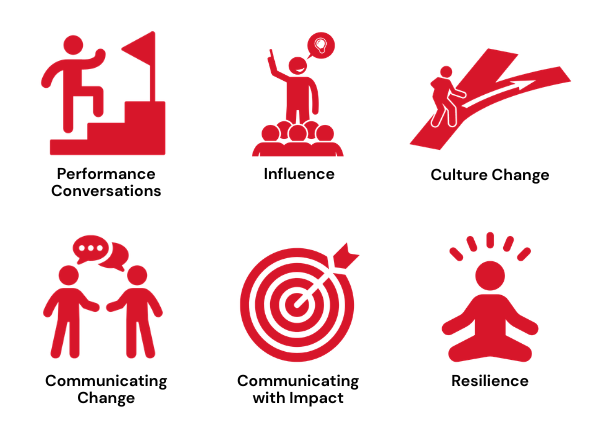
To find out how we can help leaders in your organisation to be more impactful, influential and persuasive visit www.threshold.co.uk