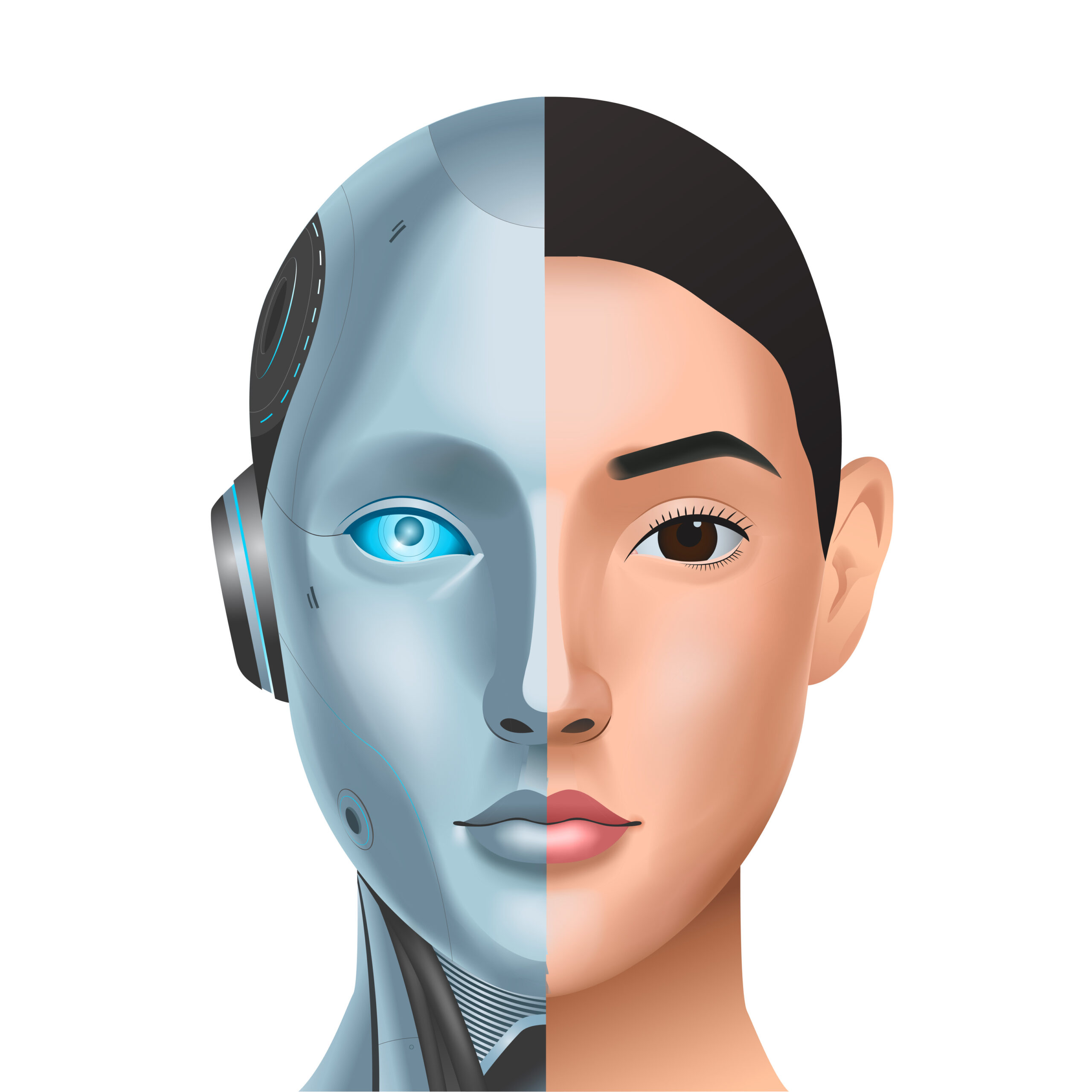
Ten years after his death, insights from the artist about reinvention and staying relevant are more important than ever
5-minute read – 100% written by humans
How did the shy art school student from Bromley in Southeast London achieve what many of the world’s largest corporations singularly fail to do? Namely, to stay relevant over several decades. Artists who achieve this are as rare as hen’s teeth.
Reinvention is not especially unusual. The point is that most of us attempt to do it when we are in a trough rather than at a peak. Bowie reinvented himself each time his latest incarnation was at its apex. And therein lies the lesson for business leaders operating in a perpetually changing technological landscape.
Breaking up a winning team
The same principle applies to team sports. Coaches rarely break up a winning team. Superstars are usually only replaced when they’re clearly in decline. One of the things that characterises coaches whose teams dominate across decades, is that they invariably at some point, raise eyebrows by releasing players who seem to be at their prime. These are the elite coaches who don’t wait for signs of decline before they make changes.
If it ain’t bust, fix it
We are talking about the rare breed of pioneer in any field who fix it when it ain’t bust. On one analysis this is foolish and risky. But there’s another way to look at it. If you make a change when you have momentum on your side, the odds of success change considerably. Attempt to change when you are becalmed or in the doldrums and your probability of success steeply declines. Unfortunately, that’s the point at which most corporations attempt reinvention.
We see this phenomenon repeatedly in the commercial world, where history teaches us that reinvention alone is not enough. What matters is genuine commitment early enough. In retail, both Blockbuster and Borders the bookstore, attempted to reinvent themselves, but it was too little too late. In technology, both Nokia and BlackBerry only attempted reinvention after they had conceded product leadership positions. Neither recovered.
The courage to reinvent
Or think of the inventor James Dyson pitching his bagless vacuum cleaner to the leadership of Hoover. Dyson’s original plan was simply to license his invention to the global market leader. But Hoover famously rejected Dyson, leaving him to go it alone. Dyson went on to usurp Hoover’s leadership position. But why reject what proved to be a winning design? The answer was that for Hoover, the status quo felt more appealing. The sale of dust bags was a lucrative cash cow. This was a failure to imagine a marketplace without the revenue from bags; a failure to have the courage to reinvent and change something that was working.
We rarely change when things are going well. And there’s a solid psychological theory that supports this: loss aversion. Imagine you’ve got a £100 ticket to go and see your favourite band. Experiments from the world of behavioural economics, tell us that typically you might be willing to pay £100 to acquire it, but it would take a £200 bid to persuade you to sell it. In other words, it would take you twice as much to give up what you already had. You place a far greater premium on what you possess now, than on what you may gain in the future. Changing things when you have nothing to lose requires minimum courage. Changing things when you have plenty to lose is a different matter. But that is increasingly what will characterize top performers, especially in the era of AI.
We’re further limited by what psychologists call the mere exposure effect. Experiments show we have an inherent instinct to prefer the familiar over the unfamiliar. We like what we have grown used to. An unfamiliar landscape would have felt more threatening to our ancestors than a familiar one.
AI has the potential to boost productivity exponentially, but it will not be a rising tide that raises all boats. Transformative technologies tend to sharpen the dividing line between winners and losers. Success is likely to be concentrated in fewer high-performing victors.
So far, what’s causing commentators to scratch their heads is not the transformative nature of the technology, but the dearth of evidence of real productivity gains.
Fundamentally reimagine
Here again, recent history teaches us something important about the nature of business reinvention. In the 1990s, the internet promised to transform business. But many corporations simply overlaid the new technology onto an existing organizational model. The breakaway successes of the era were those that used the technology to fundamentally reimagine their value chains.
The crucial question facing corporations now is not whether reinvention in the light of AI is a good idea. Based on the evidence, that questions settled. The real question is whether they have the corporate cultures to support this. Reinvention is not purely about intellectual horsepower. Being smart is a necessary but not a sufficient condition for success.
A culture of constructive challenge
In corporate cultures that are best suited for reinvention, people are encouraged to think, solve problems, and process information in a range of different ways. This leads to better innovation and fewer blind spots. In these cultures, people at all levels can speak up, share ideas, ask questions, or challenge without being judged by others. It’s what at Threshold we call a culture of constructive challenge.
How many of today’s largest corporations can honestly say they have a culture like this? That’s what we’re looking to find out in a major benchmarking survey with our research partners at YouGov. The answer will give us an indication of how fit the industry currently is to reinvent itself to take advantage of AI.
Which of today’s companies will prove to be the equivalents of the Bowies and who will be the also-rans?
We will find out soon.
Watch this space.
To find out how we can help leaders in your organisation to be more impactful, influential and persuasive visit www.threshold.co.uk